
Morning Routine for Mental Clarity: Start Your Day with Focus and Calm
Introduction: How Your Morning Shapes Your Mind
Your morning doesn’t just start your day—it sets the direction for your mind.
A rushed morning often leads to:
- Scattered thoughts
- Low focus
- Constant stress
While a calm, intentional start creates:
- Clarity
- Balance
- Better decision-making
In today’s fast-paced lifestyle, most people wake up and immediately:
- Check their phone
- Dive into messages
- Start thinking about tasks
Before the day even begins, the mind feels overwhelmed.
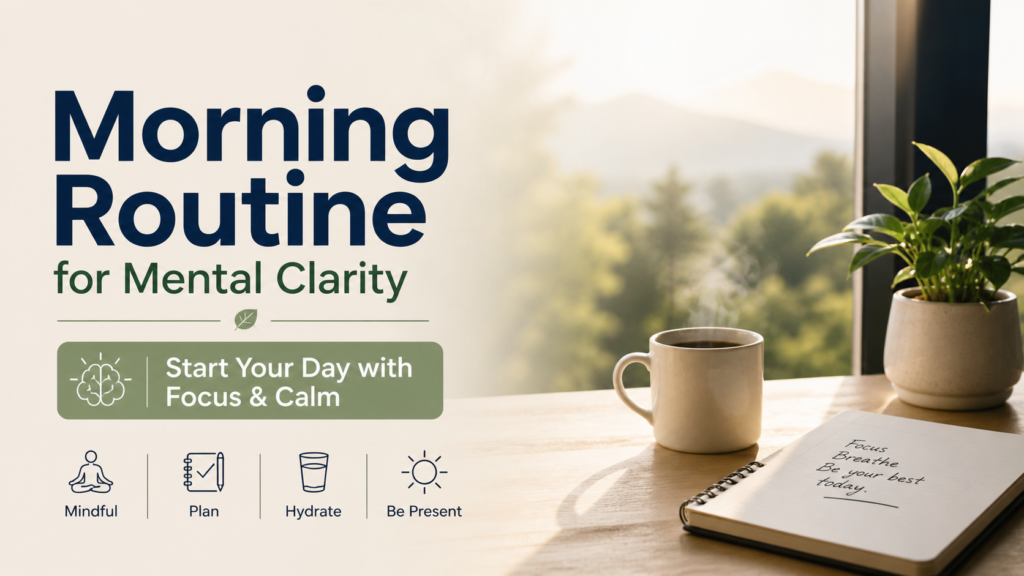
A mindful morning is not about doing more
It’s about doing things with awareness
“Win the morning, and the day follows.”
Waking Up with Awareness Instead of Urgency
The first 5–10 minutes after waking up are extremely important.
What most people do:
- Pick up their phone
- Check notifications
- Get mentally overloaded
What works better:
- Sit quietly
- Take deep breaths
- Observe your surroundings
Why it matters:
It creates a smooth transition from sleep to awareness
The way you wake up often decides your mental state for the entire day
Real-Life Scenario
Let’s compare two mornings:
Person A:
- Wakes up
- Checks phone immediately
- Feels rushed and distracted
Person B:
- Wakes up
- Spends 5 minutes in silence
- Starts day calmly
By afternoon:
- Person A feels stressed
- Person B feels more in control
Same day, different start → completely different mindset
Clearing Mental Clutter Before It Builds
Morning is when your mind is naturally fresh.
This is the best time to clear mental load.
What helps:
- Writing your thoughts
- Quiet reflection
- Simple journaling
Why it works:
- Reduces overthinking later
- Creates mental space
“A clear mind creates a focused life.”
Rare insight:
Thoughts ignored in the morning often:
Return stronger during the day
Gentle Movement to Awaken the Mind and Body
Movement is one of the easiest ways to boost mental clarity.
Simple options:
- Stretching
- Yoga
- Short walk
Benefits:
- Improves blood flow
- Reduces brain fog
- Increases focus
Opinion:
You don’t need intense workouts in the morning
You need gentle consistency
Studies suggest:
Morning movement helps improve mood, focus, and cognitive performance.
Nourishing Your Body for Better Focus
What you consume in the morning affects your energy and concentration.
Good habits:
- Drink water after waking up
- Eat a balanced meal
- Avoid heavy, processed foods
Why it matters:
Stable energy = stable mind
Real insight:
Skipping meals or eating poorly in the morning often leads to:
Low focus and irritability later
Protecting Your Morning from Digital Noise
This is one of the biggest mistakes people make.
Problem:
- Social media
- Emails
- Notifications
Immediately overload your brain
What works:
- Delay screen time
- Create a “no phone” window (15–30 mins)
Your mind needs silence before it can handle noise
Setting an Intention for the Day
A simple intention can guide your entire day.
Examples:
- “I will stay calm today”
- “I will stay focused”
- “I will not overreact”
Why it works:
- Gives direction to your actions
- Improves emotional control
Without intention, your day is controlled by circumstances
With intention, you control your response
Why Most Morning Routines Fail
Many people try:
- Complex routines
- Too many habits
Then quit within days.
Reason:
- Too complicated
- Too unrealistic
What actually works:
Simple routine + consistency
Opinion:
A simple routine you follow daily is better than a perfect routine you quit
Consistency: The Key to Lasting Mental Clarity
Mental clarity is not built in one day.
It comes from:
- Repeating small habits
- Showing up daily
“Clarity is not found in perfection, but in consistency.”
Real insight:
Even 10–15 minutes of a good morning routine can:
Change your entire day
Conclusion: A Calm Morning, A Clear Mind
Your morning is your opportunity to:
- Reset
- Refocus
- Reconnect
You don’t need a perfect routine.
Start with:
- One habit
- One small change
And build gradually.
Because in the end:
Mental clarity is not something you chase—
it is something you create, one morning at a time.
Editorial Process
Our editorial process focuses on accuracy, clarity, and reader trust.
Health articles published on this website follow these principles:
- Research-based information from trusted medical sources
- Clear explanations written for general readers
- Regular updates when medical guidelines change
- Transparency about sources and references
Content is researched and written by health content researchers and reviewed using publicly available medical data.
Areas of focus include:
- infectious diseases
- preventive healthcare
- symptom awareness
- everyday health education
Medical Disclaimer
This article is for informational purposes only and does not replace professional medical advice. Always consult a qualified healthcare provider for diagnosis, treatment, or medical concerns.
Our Editorial & Trust Standards
At Healzeno, we aim to provide clear, responsible, and useful health information. Our content follows a structured editorial process:
Research → Writing → Fact-checking → Source verification → Editing → Publication → Periodic review
We aim to:
- Use reliable medical and public-health sources
- Avoid unsupported or misleading health claims
- Clearly distinguish general information from professional medical advice
- Update articles when important information changes
- Correct factual errors when identified
Healzeno is an independent health-information website and is not a medical clinic, hospital, or medical practice.
Why Trust Our Health Content
Our health articles are created using evidence-based information from globally recognized medical organizations. Each article is carefully researched using publicly available guidelines, research publications, and educational materials from trusted institutions such as the Centers for Disease Control and Prevention, the Mayo Clinic, the Cleveland Clinic, and the World Health Organization. Our goal is to present medical information in simple, easy-to-understand language so readers can make informed decisions about their health.

2 Comments