
Early Signs of Diabetes: Symptoms You Should Never Ignore
Introduction: When Small Symptoms Carry Big Meaning
Most health problems don’t appear suddenly—they build slowly over time.
A little extra thirst, slight fatigue, or small changes in your body may seem normal, especially in a busy lifestyle. But sometimes, these small signs are your body’s way of asking for attention. Diabetes is one such condition that develops quietly.
In its early stages:
- Symptoms feel mild
- Changes seem harmless
- And most people ignore them
Early detection makes a huge difference
“The earlier you listen, the easier it is to heal.”
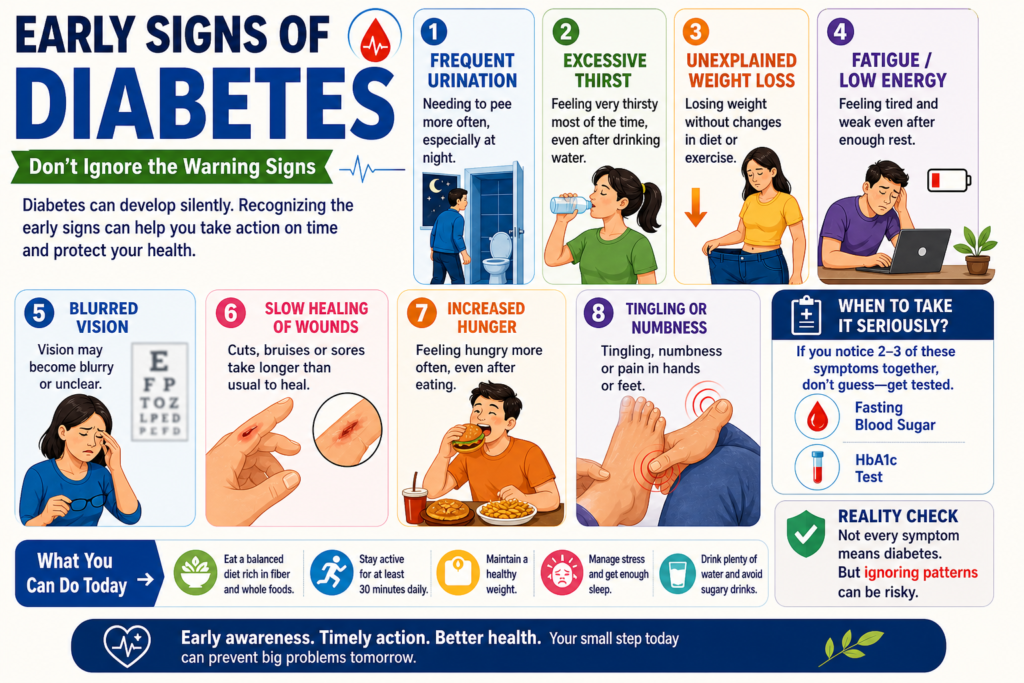
Understanding Diabetes: A Silent but Growing Concern
Diabetes happens when the body cannot properly regulate blood sugar levels.
This may be because:
- The body doesn’t produce enough insulin
- Or it cannot use insulin effectively
As a result, sugar builds up in the blood.
Why early signs are missed:
- Symptoms develop slowly
- They overlap with everyday issues like stress or fatigue
- People normalize them
But even small changes can affect:
- Energy levels
- Metabolism
- Overall health
Constant Thirst That Never Feels Enough
One of the earliest signs is persistent thirst.
What it feels like:
- Drinking water frequently
- Still feeling dry
- Needing more fluids than usual
Why it happens:
Excess sugar in the blood pulls water from your body tissues.
This leads to dehydration from within
What These Symptoms May Indicate
Many people think:
“Maybe I’m just not drinking enough water”
But the real issue could be internal imbalance
Frequent Urination (Especially at Night)
Along with thirst, frequent urination is a common early symptom.
Signs to notice:
- More bathroom visits than usual
- Waking up at night to urinate
Why it happens:
The body tries to remove excess sugar through urine.
This creates a cycle:
More sugar → More urination → More thirst
Hidden impact:
- Disturbed sleep
- Daytime fatigue
Unusual Fatigue and Low Energy
Everyone feels tired sometimes—but this is different.
This fatigue:
- Doesn’t go away with rest
- Feels constant
- Affects daily functioning
Why it happens:
When glucose isn’t used properly:
Your body lacks usable energy
You may be eating enough—but your body is not using that energy effectively
Blurred Vision and Difficulty Focusing
Vision changes are often ignored, especially in people who work on screens.
Symptoms:
- Blurred vision
- Difficulty focusing
- Temporary vision fluctuations
Why it happens:
High blood sugar affects the eye lens.
This causes temporary changes in vision clarity
Many people assume:
“It’s just screen time”
But it can also be an early metabolic signal
Increased Hunger Even After Eating
Another subtle sign is feeling hungry even after meals.
Why it happens:
Cells are not receiving enough glucose for energy.
So your brain signals:
“Eat more”
Result:
- Frequent snacking
- Overeating
- No real satisfaction
Unexplained Weight Changes
Unexpected weight changes can also be an early warning.
What you may notice:
- Sudden weight loss
- Or gradual weight gain
Why?
The body may start:
- Breaking down fat and muscle for energy
- Or storing excess sugar as fat
Weight change without effort is always worth paying attention to
Slow Healing and Frequent Infections
Your body’s healing ability can also slow down.
Signs:
- Cuts take longer to heal
- Frequent infections
- Skin issues
Why it happens:
High blood sugar affects:
- Blood circulation
- Immune system
Making recovery slower
Real-Life Scenario
Let’s look at a common example:
A working individual:
- Feels tired daily
- Drinks more water than usual
- Wakes up at night to urinate
- Notices slight blurred vision
They assume:
- It’s stress
- It’s workload
- It’s lack of sleep
But after testing:
Blood sugar levels are high
After early action:
- Energy improves
- Symptoms reduce
- Health stabilizes
This is how early awareness can prevent bigger problems
When to Take These Signs Seriously
One symptom alone may not mean diabetes.
But:
If multiple symptoms appear together
And continue for weeks
Then it’s time to act.
What you should do:
- Get a blood sugar test
- Consult a doctor
- Improve lifestyle habits
Most People Ignore
Diabetes doesn’t suddenly appear
It develops over time with warning signs
Ignoring early symptoms can lead to:
- Serious complications
- Long-term health issues
Conclusion: Awareness Is the First Step Toward Prevention
Diabetes may grow silently, but your body rarely stays silent.
It communicates through:
- Energy changes
- Physical symptoms
- Daily discomfort
The key is to notice early and respond
Because:
Prevention is always easier than treatment
And awareness is where it begins.
Editorial Process
Our editorial process focuses on accuracy, clarity, and reader trust.
Health articles published on this website follow these principles:
- Research-based information from trusted medical sources
- Clear explanations written for general readers
- Regular updates when medical guidelines change
- Transparency about sources and references
Content is researched and written by health content researchers and reviewed using publicly available medical data.
Areas of focus include:
- infectious diseases
- preventive healthcare
- symptom awareness
- everyday health education
Medical Disclaimer
This article is for informational purposes only and does not replace professional medical advice. Always consult a qualified healthcare provider for diagnosis, treatment, or medical concerns.
Our Editorial & Trust Standards
At Healzeno, we aim to provide clear, responsible, and useful health information. Our content follows a structured editorial process:
Research → Writing → Fact-checking → Source verification → Editing → Publication → Periodic review
We aim to:
- Use reliable medical and public-health sources
- Avoid unsupported or misleading health claims
- Clearly distinguish general information from professional medical advice
- Update articles when important information changes
- Correct factual errors when identified
Healzeno is an independent health-information website and is not a medical clinic, hospital, or medical practice.
Why Trust Our Health Content
Our health articles are created using evidence-based information from globally recognized medical organizations. Each article is carefully researched using publicly available guidelines, research publications, and educational materials from trusted institutions such as the Centers for Disease Control and Prevention, the Mayo Clinic, the Cleveland Clinic, and the World Health Organization. Our goal is to present medical information in simple, easy-to-understand language so readers can make informed decisions about their health.

2 Comments