
Why You Feel Tired Even After 8 Hours of Sleep (7 Hidden Reasons + How to Fix It)
Quick Answer
Feeling tired even after 8 hours of sleep is usually caused by poor sleep quality, disrupted sleep cycles, stress, or lifestyle habits like late-night screen use. Even if you sleep long enough, your body may not enter deep restorative sleep. Improving sleep routine, reducing stress, and limiting screen exposure can help restore energy levels.
Summary Box
- What it is: Feeling exhausted despite getting enough sleep
- Early signs: Brain fog, low energy, irritability
- Main cause: Poor sleep quality (not duration)
- When to worry: If fatigue lasts more than 2–3 weeks
- Quick tip: Avoid screens 1 hour before bed and follow a fixed sleep schedule
If you feel tired even after a full night’s sleep, your sleep quality—not your sleep time—may be the real problem.
Introduction
You sleep for 7–8 hours. You wake up… and still feel tired. At first, you ignore it. Maybe it’s stress. Maybe just a bad day. But then it keeps happening—low energy, poor focus, constant fatigue. You start depending on caffeine just to function. According to CDC data (2024), more than 35% of adults report poor sleep quality, even when they spend enough time in bed. Experts from the Mayo Clinic highlight that sleep is not just about duration—it’s about how effectively your body recovers during the night.
The real problem?
Most people track hours of sleep, but ignore sleep quality.
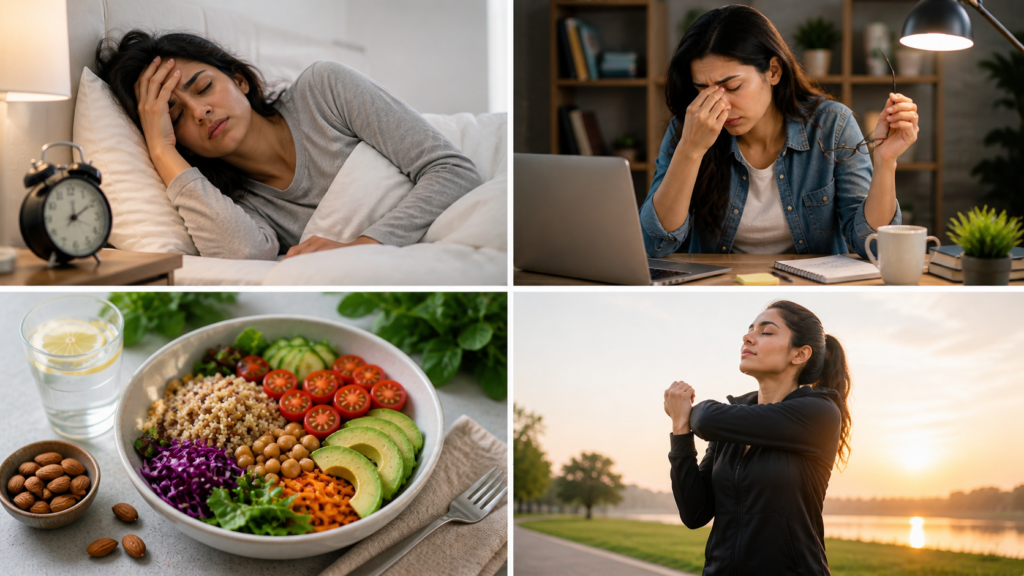
Top Signs You’re Not Getting Quality Sleep
- Feeling tired right after waking up
- Brain fog and poor concentration
- Irritability or mood swings
- Daytime sleepiness
- Lack of motivation
What Does It Mean to Feel Tired After Sleep?
It means your body is not getting deep, restorative sleep. Even if you sleep for 8 hours, your brain may not complete proper sleep cycles needed for recovery. Think of it like charging your phone overnight—but it only reaches 50%. The issue isn’t time. It’s inefficient recovery.
Early Signs Most People Ignore
- Feeling heavy in the morning
- Needing coffee immediately
- Low mental clarity
- Reduced productivity
- Feeling “off” without reason
Real-Life Example
You wake up after a full night’s sleep. But instead of feeling fresh, you feel slow and unmotivated. You grab your phone, scroll for a while, then rely on coffee to start your day. This becomes your routine. But it’s actually a warning sign your sleep quality is poor.
Symptoms Table
| Symptom | How It Feels | Common In |
|---|---|---|
| Fatigue | Low energy all day | Adults |
| Brain fog | Poor focus | Students, professionals |
| Irritability | Mood swings | Everyone |
| Daytime sleepiness | Need naps | Sleep-deprived people |
| Headaches | Morning heaviness | Poor sleepers |
| Low motivation | No drive | Office workers |
Main Symptoms
- Constant tiredness
- Difficulty concentrating
- Mood changes
- Low productivity
- Dependence on caffeine
- Reduced physical energy
Causes (Real-Life Based)
1. Poor Sleep Quality
Your body doesn’t reach deep sleep stages
2. Screen Use Before Bed
Blue light reduces melatonin production
Harvard research shows that nighttime screen exposure significantly lowers melatonin levels
3. Stress & Overthinking
Your brain stays active even while resting
4. Irregular Sleep Schedule
Sleeping at different times disrupts body clock
5. Lack of Physical Activity
Your body isn’t physically tired enough
6. Poor Diet
Heavy meals and sugar disturb sleep cycles
7. Sleep Disorders
Conditions like insomnia or sleep apnea
Here’s where most people get it wrong…
They try to fix sleep at night. But the real problem starts during the day.
If your daily routine includes:
- High stress
- Long screen time
- No physical activity
Your sleep quality will suffer—no matter how long you sleep.
Another mistake:
Trying to “catch up” on sleep during weekends
This actually confuses your body clock even more.
Sleep is built during the day, not fixed at night.
Treatment
Home Remedies
- Maintain a fixed sleep schedule
- Avoid screens 60 minutes before bed
- Keep your room dark and cool
- Exercise regularly
- Practice relaxation techniques
Medical Treatment
- Sleep studies (for diagnosis)
- Therapy for stress or anxiety
- Doctor-prescribed medication (if needed)
What Doesn’t Work
- Sleeping longer randomly
- Using phone in bed
- Relying only on caffeine
Ignoring rest is one of the biggest mistakes people make.
But here’s where most people fail… consistency.
When to See a Doctor
- Fatigue lasting more than 2–3 weeks
- Loud snoring or breathing pauses
- Severe daytime sleepiness
- Persistent headaches
High-Risk Groups:
- Elderly
- Overweight individuals
- People with chronic conditions
Complications (If Ignored)
- Weak immune system
- Mental health issues
- Reduced work performance
- Increased risk of heart disease
- Weight gain
Prevention (Real-World Tips)
- Sleep and wake at the same time daily
- Avoid caffeine after evening
- Reduce screen exposure at night
- Stay physically active
- Manage stress
Real-Life Scenario
Amit works late, uses his phone in bed, and sleeps irregularly. At first, he feels slightly tired. Then comes brain fog, irritability, and low productivity. He ignores it—until it starts affecting his work performance. This is how sleep problems develop gradually.
Research & Insights
- According to CDC (2024), over 35% of adults report poor sleep quality
- Mayo Clinic reports that sleep disorders are a major cause of fatigue
- Harvard Medical School research shows blue light reduces melatonin
- WHO data links poor sleep with lifestyle-related diseases
Key Takeaways
- Sleep quality matters more than duration
- Early signs are often ignored
- Lifestyle habits are the main cause
- Most cases are reversible
- Consistency is key
- Screen exposure plays a major role
- Stress directly impacts sleep quality
FAQs
1. Why do I feel tired after sleeping 8 hours?
Because your sleep quality may be poor.
2. Can stress affect sleep quality?
Yes, it prevents deep restorative sleep.
3. Is this condition serious?
It can become serious if ignored long-term.
4. Can I fix it naturally?
Yes, with proper lifestyle changes.
5. Does phone use affect sleep?
Yes, it disrupts sleep hormones.
Last Updated: April 12, 2026
Editorial Process
Our editorial process focuses on accuracy, clarity, and reader trust.
Health articles published on this website follow these principles:
- Research-based information from trusted medical sources
- Clear explanations written for general readers
- Regular updates when medical guidelines change
- Transparency about sources and references
Content is researched and written by health content researchers and reviewed using publicly available medical data.
Areas of focus include:
- infectious diseases
- preventive healthcare
- symptom awareness
- everyday health education
Medical Disclaimer
This article is for informational purposes only and does not replace professional medical advice. Always consult a qualified healthcare provider for diagnosis, treatment, or medical concerns.
Our Editorial & Trust Standards
At Healzeno, we aim to provide clear, responsible, and useful health information. Our content follows a structured editorial process:
Research → Writing → Fact-checking → Source verification → Editing → Publication → Periodic review
We aim to:
- Use reliable medical and public-health sources
- Avoid unsupported or misleading health claims
- Clearly distinguish general information from professional medical advice
- Update articles when important information changes
- Correct factual errors when identified
Healzeno is an independent health-information website and is not a medical clinic, hospital, or medical practice.
Why Trust Our Health Content
Our health articles are created using evidence-based information from globally recognized medical organizations. Each article is carefully researched using publicly available guidelines, research publications, and educational materials from trusted institutions such as the Centers for Disease Control and Prevention, the Mayo Clinic, the Cleveland Clinic, and the World Health Organization. Our goal is to present medical information in simple, easy-to-understand language so readers can make informed decisions about their health.

One Comment