Gut Health Guide: Best Foods to Improve Digestion Naturally
Introduction: Why Gut Health Deserves Your Attention
In today’s fast-paced lifestyle, gut health has become one of the most important—and often ignored—aspects of overall wellness. Your gut does much more than digest food.
It directly affects:
- Immunity
- Energy levels
- Skin health
- Mental well-being
When your gut is healthy:
- You feel lighter
- Your mind feels clearer
- Your energy stays stable
But modern habits like:
- Processed foods
- Irregular eating
- High stress
slowly damage this balance.
You don’t need complicated diets or expensive supplements
You need simple, consistent food habits
Understanding the Gut: Your Body’s Inner Ecosystem
Your gut is home to trillions of bacteria—both good and bad.
When balanced:
- Digestion is smooth
- Nutrients are absorbed properly
- Energy remains stable
When imbalanced:
- Bloating
- Gas
- Fatigue
- Digestive discomfort
Gut health is not about removing foods
It’s about feeding the right bacteria
Studies suggest:
A balanced gut microbiome plays a key role in:
- Immunity
- Metabolism
- Even mood regulation
Fermented Foods: Natural Probiotics for a Healthy Gut
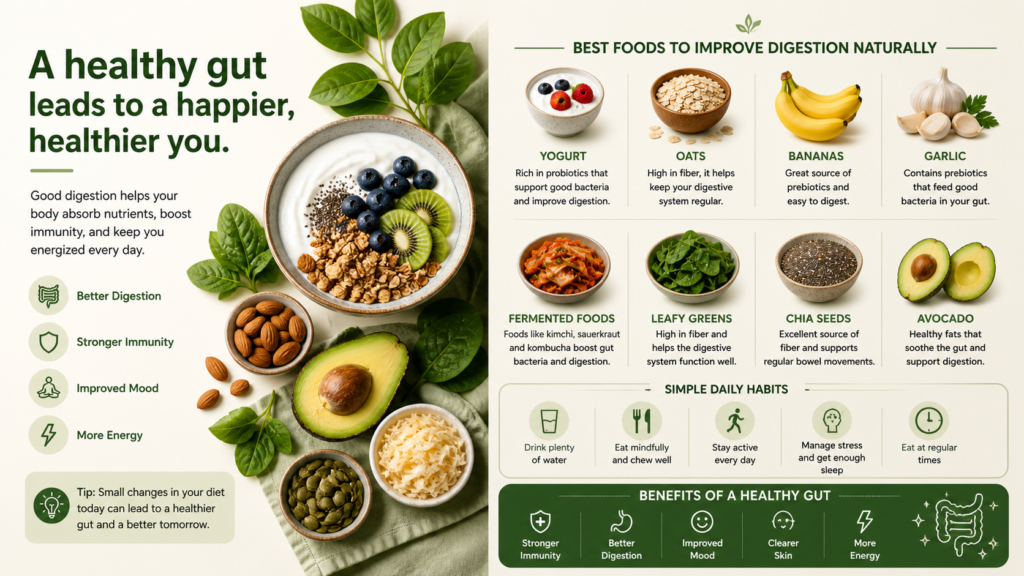
Fermented foods such as curd can be included as part of a balanced diet.
What they do:
- Add good bacteria (probiotics)
- Improve digestion
- Reduce bloating
Indian foods that help:
- Curd
- Buttermilk
- Idli/dosa batter
These are simple, affordable, and already part of daily diets.
Many people spend money on probiotic supplements…
But traditional foods often work just as well.
Fiber-Rich Foods: The Fuel for Your Gut
Fiber is essential because it feeds the good bacteria in your gut.
Benefits:
- Smooth digestion
- Regular bowel movement
- Better gut balance
Best sources:
- Whole grains
- Vegetables
- Fruits
Low fiber = poor gut health
Most people don’t eat enough fiber—and that’s one of the biggest reasons for digestive issues.
If you want to put these food choices into a simple short-term routine, you can also follow a 7-day gut reset diet plan.
Prebiotic Foods: Helping Good Bacteria Grow
Prebiotics are just as important as probiotics.
If probiotics are “good bacteria”
Prebiotics are their “food”
Common prebiotic foods:
- Bananas
- Garlic
- Onions
- Whole grains
Many people focus only on probiotics…
But without prebiotics, those bacteria cannot survive long
Hydration and Warm Foods: Simple but Powerful
Sometimes, gut health is not about what you eat—but how you support digestion.
What works best:
- Warm, freshly cooked food
- Drinking enough water
- Herbal teas (ginger, tulsi)
Why it matters:
Cold, processed food is harder to digest.
Warm food helps:
- Better digestion
- Less bloating
- Improved comfort
Even switching from cold drinks to warm water can improve digestion over time.
If you are already experiencing digestive problems, it can help to recognize the early signs of poor gut health before changing your diet.
Mindful Eating: The Missing Piece Most People Ignore
This is where most people go wrong.
You may eat healthy food—but still face digestion issues.
Why?
Because of how you eat
Common mistakes:
- Eating while using phone
- Eating too fast
- Eating under stress
What works:
- Eat slowly
- Chew properly
- Stay present during meals
Reminder:
“It’s not just what you eat, but how you eat that matters.”
Let’s take a common example:
A person with digestive issues:
- Eats outside food frequently
- Drinks less water
- Eats quickly while working
Result:
- Bloating
- Low energy
- Irregular digestion
Now small changes:
- Adds curd daily
- Drinks more water
- Eats slowly
Within weeks:
- Digestion improves
- Energy increases
- Discomfort reduces
This is how simple habits fix gut health
Why “Healthy Diets” Sometimes Fail
Many people try:
- Strict diets
- Fancy superfoods
But still face issues.
Why?
Because:
- They are inconsistent
- They ignore basics
- They don’t fix lifestyle habits
Simple Indian food + consistency > complicated diet plans
Creating a Gut-Friendly Lifestyle
Gut health is not about perfection—it’s about consistency.
Focus on:
- Balanced meals
- Daily hydration
- Regular eating habits
- Mindful eating
These small habits create:
- Better digestion
- Strong immunity
- Stable energy
Conclusion: Small Changes, Big Impact
Your gut health is built through your daily choices.
You don’t need drastic changes.
Even small steps:
- Eating better
- Drinking water
- Slowing down
Can create powerful results over time.
Because in the end:
True wellness starts from within—and your gut is where it begins.
Editorial Process
Our editorial process focuses on accuracy, clarity, and reader trust.
Health articles published on this website follow these principles:
- Research-based information from trusted medical sources
- Clear explanations written for general readers
- Regular updates when medical guidelines change
- Transparency about sources and references
Content is researched and written by health content researchers and reviewed using publicly available medical data.
Areas of focus include:
- infectious diseases
- preventive healthcare
- symptom awareness
- everyday health education
Medical Disclaimer
This article is for informational purposes only and does not replace professional medical advice. Always consult a qualified healthcare provider for diagnosis, treatment, or medical concerns.
Our Editorial & Trust Standards
At Healzeno, we aim to provide clear, responsible, and useful health information. Our content follows a structured editorial process:
Research → Writing → Fact-checking → Source verification → Editing → Publication → Periodic review
We aim to:
- Use reliable medical and public-health sources
- Avoid unsupported or misleading health claims
- Clearly distinguish general information from professional medical advice
- Update articles when important information changes
- Correct factual errors when identified
Healzeno is an independent health-information website and is not a medical clinic, hospital, or medical practice.
Why Trust Our Health Content
Our health articles are created using evidence-based information from globally recognized medical organizations. Each article is carefully researched using publicly available guidelines, research publications, and educational materials from trusted institutions such as the Centers for Disease Control and Prevention, the Mayo Clinic, the Cleveland Clinic, and the World Health Organization. Our goal is to present medical information in simple, easy-to-understand language so readers can make informed decisions about their health.

9 Comments