Simple Self-Care Ideas for Busy People: Stay Balanced Even on Hectic Days
Introduction: When Life Feels Too Full to Pause
In today’s world, being busy is often seen as success. But here’s the hidden truth:
A constantly busy life often comes at the cost of your mental well-being.
Days get filled with:
- Work
- Responsibilities
- Endless notifications
Leaving no space to simply breathe.
Self-care is not about escaping your life
It’s about creating small moments within it
“You don’t have to slow down your life, just your moments.”
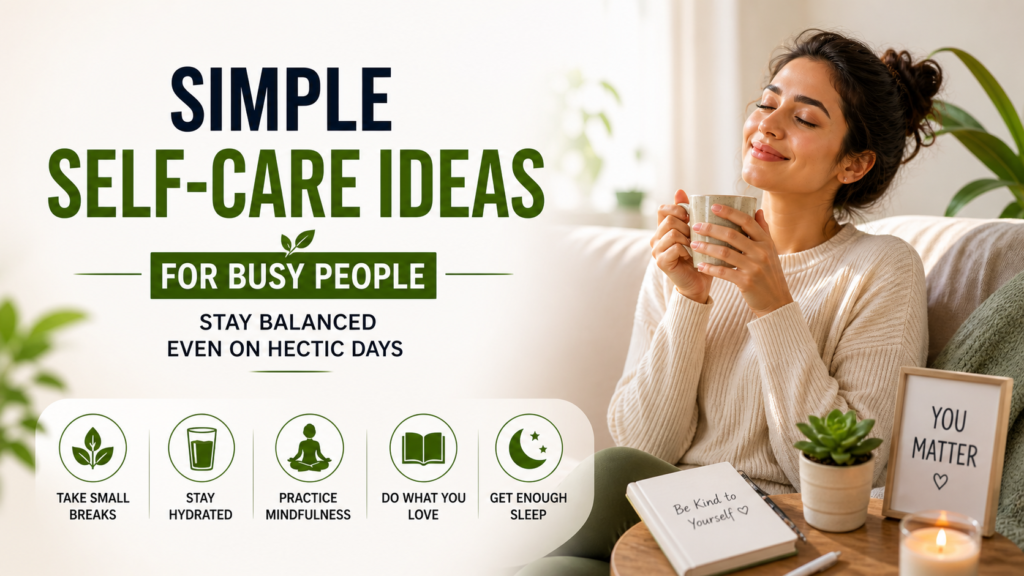
Redefining Self-Care: It Doesn’t Have to Be Time-Consuming
Most people think self-care means:
- Long routines
- Spa days
- Vacations
That’s why they avoid it.
Reality:
Self-care can be as simple as:
- Taking a deep breath
- Pausing for a minute
- Stepping away from your screen
If self-care feels like extra work, you’re doing it wrong
The most effective self-care habits are:
Small, repeatable, and effortless
Real-Life Scenario
Let’s take a common example:
A busy professional:
- Works long hours
- Skips breaks
- Feels mentally drained
They think:
“I don’t have time for self-care”
Small changes:
- Takes 2-minute breaks
- Drinks water regularly
- Avoids phone during meals
Within days:
- Feels calmer
- Less stressed
- More in control
This is real self-care—not luxury, but consistency.
Starting Your Day with a Gentle Pause
Most mornings begin with urgency:
- Alarm → Phone → Work
Mind feels rushed instantly.
Better approach:
- Sit quietly for a few minutes
- Enjoy tea/coffee mindfully
- Take deep breaths
Why it works:
It creates:
- Calmness
- Awareness
- Better focus
A calm morning reduces stress for the entire day
Finding Calm in the Middle of Chaos
You don’t need long breaks—you need small pauses.
Simple reset moments:
- Close your eyes for 1 minute
- Take slow breaths
- Step away from your desk
Why it matters:
These pauses:
- Reduce stress
- Refresh your mind
- Improve focus
“Almost everything will work again if you unplug it for a few minutes—including you.”
Creating Boundaries with Your Time and Energy
Constant connectivity is one of the biggest causes of mental fatigue.
Problem:
- Notifications
- Emails
- Social media
Always demanding your attention
Solution:
- Set “no phone” time
- Limit notifications
- Take digital breaks
Opinion:
Most people are not tired from work—
They are tired from constant interruptions
Nourishing Yourself in Simple Ways
Self-care is also physical.
Small habits that matter:
- Drink enough water
- Eat balanced meals
- Stretch during long sitting hours
Why it matters:
Your body and mind are connected.
When your body feels better:
- Your mood improves
- Your energy increases
Real insight:
Ignoring basic needs leads to:
Irritability, fatigue, and burnout
Ending the Day with Kindness Toward Yourself
Most people end their day like this:
- Scrolling phone
- Thinking about work
- Carrying stress to bed
Result:
- Poor sleep
- Mental exhaustion
Better approach:
- Slow down
- Reflect on your day
- Let go of unfinished tasks
You don’t need closure for everything—
You need rest
Why Self-Care Feels Difficult
It’s not lack of time.
It’s:
- Guilt (“I should be working”)
- Misunderstanding (“Self-care = luxury”)
- Perfection mindset
Reality:
Self-care is not extra
It is essential for functioning well
Letting Go of Perfection
This is where most people struggle.
They try:
- Perfect routines
- Big changes
Then quit.
What works:
- Small actions
- Daily consistency
“Taking care of yourself is not selfish, it is necessary.”
Imperfect self-care is better than no self-care
Conclusion: Making Space for Yourself, Every Day
Self-care doesn’t require extra time—it requires awareness.
Even in a busy life, you can:
- Pause for a moment
- Set small boundaries
- Treat yourself with kindness
These small actions create:
- Calmness
- Clarity
- Balance
Because in the end:
Taking care of yourself is not optional—
it is the foundation for everything else you do.
Editorial Process
Our editorial process focuses on accuracy, clarity, and reader trust.
Health articles published on this website follow these principles:
- Research-based information from trusted medical sources
- Clear explanations written for general readers
- Regular updates when medical guidelines change
- Transparency about sources and references
Content is researched and written by health content researchers and reviewed using publicly available medical data.
Areas of focus include:
- infectious diseases
- preventive healthcare
- symptom awareness
- everyday health education
Medical Disclaimer
This article is for informational purposes only and does not replace professional medical advice. Always consult a qualified healthcare provider for diagnosis, treatment, or medical concerns.
Our Editorial & Trust Standards
At Healzeno, we aim to provide clear, responsible, and useful health information. Our content follows a structured editorial process:
Research → Writing → Fact-checking → Source verification → Editing → Publication → Periodic review
We aim to:
- Use reliable medical and public-health sources
- Avoid unsupported or misleading health claims
- Clearly distinguish general information from professional medical advice
- Update articles when important information changes
- Correct factual errors when identified
Healzeno is an independent health-information website and is not a medical clinic, hospital, or medical practice.
Why Trust Our Health Content
Our health articles are created using evidence-based information from globally recognized medical organizations. Each article is carefully researched using publicly available guidelines, research publications, and educational materials from trusted institutions such as the Centers for Disease Control and Prevention, the Mayo Clinic, the Cleveland Clinic, and the World Health Organization. Our goal is to present medical information in simple, easy-to-understand language so readers can make informed decisions about their health.

3 Comments