
Why Belly Fat Feels So Difficult to Lose (And What Actually Works)
Introduction: Why Belly Fat Feels So Stubborn
If you’ve ever tried to lose weight, you’ve probably noticed one thing—belly fat is the last to go. You eat better, you try to stay active, and yet the changes don’t show where you expect them. This is where most people get frustrated and fall into the trap of crash diets or extreme workouts that promise quick results.Belly fat is not just a weight issue—it’s a lifestyle signal. It reflects how you eat, sleep, move, and even how stressed you are. Experts believe that sustainable fat loss doesn’t come from intensity, but from consistency. Or in simple words:
“Consistency beats intensity when it comes to real transformation.”
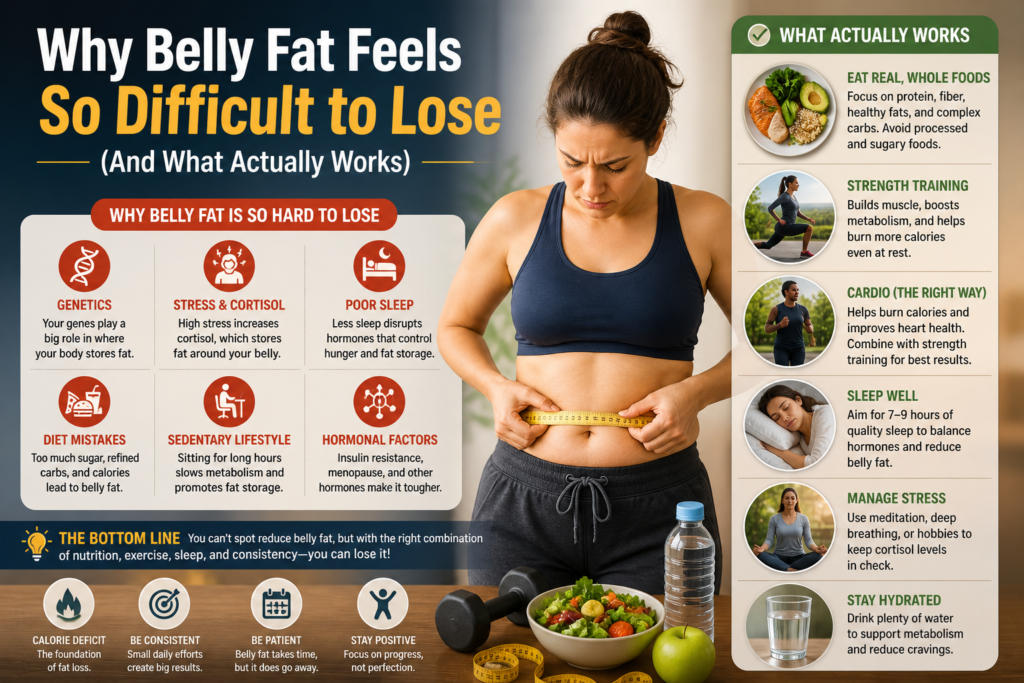
Understanding Belly Fat: It’s Not Just About Looks
Most people focus on belly fat because of appearance, but the real concern is internal health. Belly fat is often linked with:
- Poor digestion
- High stress levels
- Lack of sleep
- Hormonal imbalance
Studies suggest that excess abdominal fat is associated with higher risk of metabolic issues and low energy levels. When your daily routine becomes irregular—late nights, processed food, long sitting hours—your body starts storing fat around the abdomen as a protective response.
Digestive problems can sometimes accompany an unhealthy eating pattern, so improving gut-friendly food choices may be another useful part of a sustainable routine.
So instead of asking:
“How do I lose belly fat?”
You should ask:
“What is my lifestyle doing to my body?”
Starting Your Day Right: Small Habits That Actually Matter
Most people underestimate how powerful mornings are. A rushed, stressful morning often leads to poor choices throughout the day.
Simple habits that make a difference:
- Drink warm water after waking up
- Get 5–10 minutes of sunlight
- Do light stretching or deep breathing
These are not “fat-burning hacks,” but they activate your metabolism naturally.
Real insight:
People who start their day calmly are more likely to:
- Eat better
- Move more
- Stay consistent
Eating Mindfully: The Real Game Changer
Most people don’t gain belly fat because of one bad meal.
It happens because of repeated daily habits.
What actually works:
- Home-cooked meals
- Balanced diet (protein + fiber + healthy fats)
- Eating slowly without distractions
What silently causes belly fat:
- Late-night eating
- Sugary snacks
- Processed food
Experts believe mindful eating improves digestion and reduces overeating naturally.
Opinion:
You don’t need a “diet plan”
You need better eating habits
A protein-rich vegetarian eating pattern can also make meals more filling while supporting a sustainable calorie deficit.
“Take care of your body; it’s the only place you have to live.”
Movement at Home: Consistency Over Intensity
One of the biggest myths is:
“You need a gym to lose belly fat”
That’s not true.
What actually works:
- Daily walking
- Stretching
- Yoga
- Basic bodyweight exercises
Even 20–30 minutes daily is enough if you stay consistent.
Real insight:
People who stay active daily (even lightly) often see better long-term results than those who do intense workouts occasionally.
The Hidden Role of Stress and Sleep
You can eat healthy and exercise—but still not lose belly fat.
Poor sleep can also make healthy weight management more difficult, making a consistent sleep routine an important part of the process.
Managing daily stress is another part of building habits that are easier to maintain over time.
Why?
Because of stress and poor sleep When you’re stressed:
- Your body releases cortisol
- Cortisol increases fat storage (especially belly)
When you don’t sleep well:
- Cravings increase
- Metabolism slows down
Studies suggest that poor sleep is directly linked to weight gain and belly fat.
Simple fixes:
- Reduce screen time at night
- Sleep 7–8 hours
- Create a calming bedtime routine
Real-Life Example
Let’s take a common scenario: A working professional:
- Sits 8–10 hours daily
- Skips breakfast
- Eats late at night
- Sleeps after scrolling phone
Even if they try dieting for a few days, results don’t last.
Now small changes:
- Morning walk (15 min)
- Regular meal timing
- Less screen time at night
Within weeks, energy improves
Within months, belly fat starts reducing
This is how real transformation actually happens
Why “Spot Reduction” Doesn’t Work
Many people try:
- Abs workouts
- Belly fat exercises
But still don’t see results. Here’s the truth:
You cannot target belly fat directly
Fat loss happens across the whole body.
Belly fat reduces when:
- Your overall body fat decreases
- Your lifestyle improves
Building a Lifestyle That Actually Works
Forget quick fixes. Focus on:
- Better eating habits
- Daily movement
- Quality sleep
- Stress control
“Slow progress is still progress.”
Conclusion: Choose Sustainability Over Shortcuts
Belly fat reduction is not about doing everything perfectly—it’s about doing the right things consistently. Quick fixes may give temporary results, but they don’t last. Real transformation happens when:
- You understand your body
- You improve your habits
- You stay consistent
Editorial Process
Our editorial process focuses on accuracy, clarity, and reader trust.
Health articles published on this website follow these principles:
- Research-based information from trusted medical sources
- Clear explanations written for general readers
- Regular updates when medical guidelines change
- Transparency about sources and references
Content is researched and written by health content researchers and reviewed using publicly available medical data.
Areas of focus include:
- infectious diseases
- preventive healthcare
- symptom awareness
- everyday health education
Medical Disclaimer
This article is for informational purposes only and does not replace professional medical advice. Always consult a qualified healthcare provider for diagnosis, treatment, or medical concerns.
Our Editorial & Trust Standards
At Healzeno, we aim to provide clear, responsible, and useful health information. Our content follows a structured editorial process:
Research → Writing → Fact-checking → Source verification → Editing → Publication → Periodic review
We aim to:
- Use reliable medical and public-health sources
- Avoid unsupported or misleading health claims
- Clearly distinguish general information from professional medical advice
- Update articles when important information changes
- Correct factual errors when identified
Healzeno is an independent health-information website and is not a medical clinic, hospital, or medical practice.
Why Trust Our Health Content
Our health articles are created using evidence-based information from globally recognized medical organizations. Each article is carefully researched using publicly available guidelines, research publications, and educational materials from trusted institutions such as the Centers for Disease Control and Prevention, the Mayo Clinic, the Cleveland Clinic, and the World Health Organization. Our goal is to present medical information in simple, easy-to-understand language so readers can make informed decisions about their health.

6 Comments