
Flu (Influenza): Early Signs, Symptoms, Causes, Treatment & Prevention
Introduction
It usually starts on a normal day. You wake up feeling slightly tired. Nothing serious—just a bit “off.” You blame it on poor sleep or a busy schedule and continue your routine. By evening, your body feels heavier. A mild headache kicks in. Maybe even a slight chill. Still, most people ignore it. That’s how flu often begins—not with a dramatic fever, but with subtle signs we brush aside. Studies suggest that people are most contagious in the early stages of flu—even before they realize they are sick. Experts believe early recognition and rest both recovery time and complications. Yet, most people act too late. flu symptoms, causes, treatment, prevention, and when to seek medical help.
What Is Flu?
Flu, or influenza, is a contagious respiratory illness caused by influenza viruses. It mainly affects the nose, throat, and lungs. Unlike the common cold, flu symptoms appear suddenly and tend to be more intense. It can disrupt your daily routine within hours.
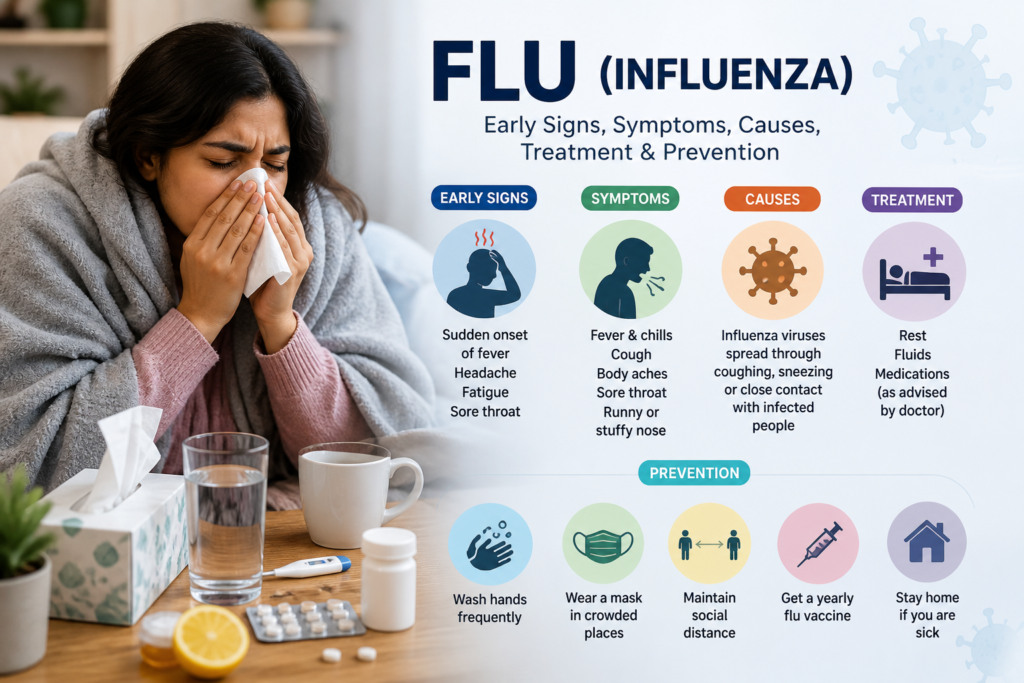
Early Signs
Flu rarely starts dramatically. Your body gives warning signals—but they’re easy to miss.
Common Early Symptoms:
- Sudden tiredness or unusual fatigue
- Mild body aches
- Slight chills
- Headache
- Scratchy or sore throat
- Low energy or brain fog
How symptoms may progress
You wake up feeling low on energy but assume it’s just fatigue. You go to work anyway. By afternoon, concentrating becomes difficult. Your body feels heavy. At night, a mild fever appears. The next morning—you’re fully sick. This is a classic flu progression that most people ignore at the early stage.
Main Symptoms
As flu develops, symptoms become stronger and more noticeable:
- High fever (100°F to 104°F)
- Dry, persistent cough
- Muscle and body aches
- Chills and sweating
- Severe fatigue
- Headache
- Runny or blocked nose
- Sore throat
If fatigue continues even after adequate rest, it may be worth looking at other common causes of persistent tiredness.
In Children:
- Vomiting
- Diarrhea
What causes influenza
Flu is caused by influenza viruses, mainly Type A and Type B.
It spreads easily in everyday situations.
How It Spreads in Daily Life:
- Coughing, sneezing, or talking releases infected droplets
- Touching surfaces like phones, desks, or door handles
- Touching your face after contact with contaminated surfaces
Risk Factors:
You’re more likely to get flu if you:
- Have weak immunity
- Are above 65 years
- Are a young child
- Have chronic conditions (diabetes, asthma, heart disease)
- Work or live in crowded environments
Based on publicly available data, crowded spaces like offices and public transport significantly increase flu transmission.
Maintaining good hygiene and supporting your overall health can also reduce the impact of common illnesses on your daily routine.
Hidden Signs Your Body Shows Early
Early Hidden Indicators:
- Increased resting heart rate
- Poor sleep quality
- Slight drop in energy levels
- Reduced appetite
Poor sleep can also contribute to daytime tiredness and may be a sign that your sleep quality needs attention.
Treatment
Most flu cases can be managed at home—if treated early.
1. Rest and Hydration
- Drink water, soups, and herbal teas
- Get proper sleep
- Avoid physical exertion
Staying properly hydrated is also important during recovery, especially when fever or sweating increases fluid loss.
2. Medications
- Paracetamol for fever and pain
- Antiviral drugs (only if prescribed)
Important Myth:
Antibiotics DO NOT work on flu because flu is caused by a virus—not bacteria.
3. Home Care Tips
- Steam inhalation for congestion
- Warm fluids for throat relief
- Use a humidifier in dry environments
When to See a Doctor
Seek medical help immediately if you experience:
- Difficulty breathing
- Chest pain
- Fever lasting more than 3 days
- Severe weakness or confusion
- Symptoms improving, then worsening again
High-Risk Groups:
- Elderly individuals
- Pregnant women
- People with chronic illnesses
- Individuals with weak immunity
Complications
Flu is not always mild.
Ignoring early symptoms can lead to:
- Pneumonia
- Bronchitis
- Sinus infections
- Worsening of existing diseases
Early care reduces these risks significantly.
How Flu is Different from Cold & COVID-19
| Feature | Flu (Influenza) | Common Cold | COVID-19 |
|---|---|---|---|
| Onset of Symptoms | Sudden (within hours) | Gradual (1–2 days) | Gradual or sudden |
| Fever | Common (high, 38–40°C) | Rare | Common |
| Body Aches | Severe | Mild | Moderate to severe |
| Fatigue / Weakness | Severe (can last weeks) | Mild | Moderate to severe |
| Cough | Dry cough, common | Mild | Dry cough, common |
| Sneezing | Sometimes | Common | Rare |
| Sore Throat | Sometimes | Common | Sometimes |
| Runny / Stuffy Nose | Sometimes | Very common | Sometimes |
| Shortness of Breath | Rare | No | Common in severe cases |
| Loss of Taste/Smell | No | No | Common |
| Headache | Common | Rare | Common |
| Complications | Pneumonia, hospitalization | Rare | Severe lung issues, long COVID |
| Contagiousness | High | Moderate | Very high |
| Recovery Time | 5–10 days (fatigue longer) | 3–7 days | 5–14 days (or longer) |
Prevention
1. Get Vaccinated
Annual flu vaccination is the most effective protection.
2. Maintain Hygiene
- Wash hands regularly
- Use sanitizer
- Avoid touching your face
3. Avoid Close Contact
- Stay away from sick individuals
- Wear a mask in crowded places if needed
How flu can spread in a workplace
One person in an office comes in feeling slightly unwell. “No big deal,” they think. By midweek, three more colleagues are sick. Within days, the entire team is affected. This is how flu spreads—from person to person before symptoms are fully recognized. Early rest and isolation could have prevented it.
Research & Insights
According to the Centers for Disease Control and Prevention (CDC), influenza causes millions of infections worldwide each year, leading to significant hospitalizations during peak seasons. Medical experts from the Mayo Clinic emphasize that recognizing early symptoms and resting immediately can shorten illness duration and reduce complications. Public health data from the World Health Organization (WHO) also shows that vaccination, hygiene practices, and early isolation are the most effective ways to control flu outbreaks.
FAQs
1. What are the first symptoms of flu?
Early symptoms include fatigue, mild body aches, chills, and headache.
2. How long does flu last?
Most people recover within 5–7 days, but weakness may last longer.
3. Is flu dangerous?
Yes, especially for older adults, children, and people with weak immunity.
4. Can flu go away without treatment?
Mild cases can recover with rest, hydration, and basic care.
5. How is flu different from a cold?
Flu starts suddenly and is more severe, while cold develops gradually.
Editorial Process
Our editorial process focuses on accuracy, clarity, and reader trust.
Health articles published on this website follow these principles:
- Research-based information from trusted medical sources
- Clear explanations written for general readers
- Regular updates when medical guidelines change
- Transparency about sources and references
Content is researched and written by health content researchers and reviewed using publicly available medical data.
Areas of focus include:
- infectious diseases
- preventive healthcare
- symptom awareness
- everyday health education
Medical Disclaimer
This article is for informational purposes only and does not replace professional medical advice. Always consult a qualified healthcare provider for diagnosis, treatment, or medical concerns.
Our Editorial & Trust Standards
At Healzeno, we aim to provide clear, responsible, and useful health information. Our content follows a structured editorial process:
Research → Writing → Fact-checking → Source verification → Editing → Publication → Periodic review
We aim to:
- Use reliable medical and public-health sources
- Avoid unsupported or misleading health claims
- Clearly distinguish general information from professional medical advice
- Update articles when important information changes
- Correct factual errors when identified
Healzeno is an independent health-information website and is not a medical clinic, hospital, or medical practice.
Why Trust Our Health Content
Our health articles are created using evidence-based information from globally recognized medical organizations. Each article is carefully researched using publicly available guidelines, research publications, and educational materials from trusted institutions such as the Centers for Disease Control and Prevention, the Mayo Clinic, the Cleveland Clinic, and the World Health Organization. Our goal is to present medical information in simple, easy-to-understand language so readers can make informed decisions about their health.

2 Comments