
Vitamin B12 Deficiency in Women: Early Signs You Should Never Ignore
Introduction: When Your Body Tries to Tell You Something
There are days when feeling tired feels normal—long work hours, poor sleep, or daily stress can easily explain it.
But what if:
- The tiredness doesn’t go away?
- Your body feels unusually heavy?
- Even small tasks start feeling exhausting?
That’s when your body may be trying to tell you something deeper. One of the most commonly overlooked reasons behind this is Vitamin B12 deficiency, especially in women.
The symptoms don’t appear suddenly. They build slowly, quietly, and are often ignored. Over time, this deficiency can affect:
- Energy levels
- Mood
- Skin health
- Nervous system
“Your body whispers before it screams.”
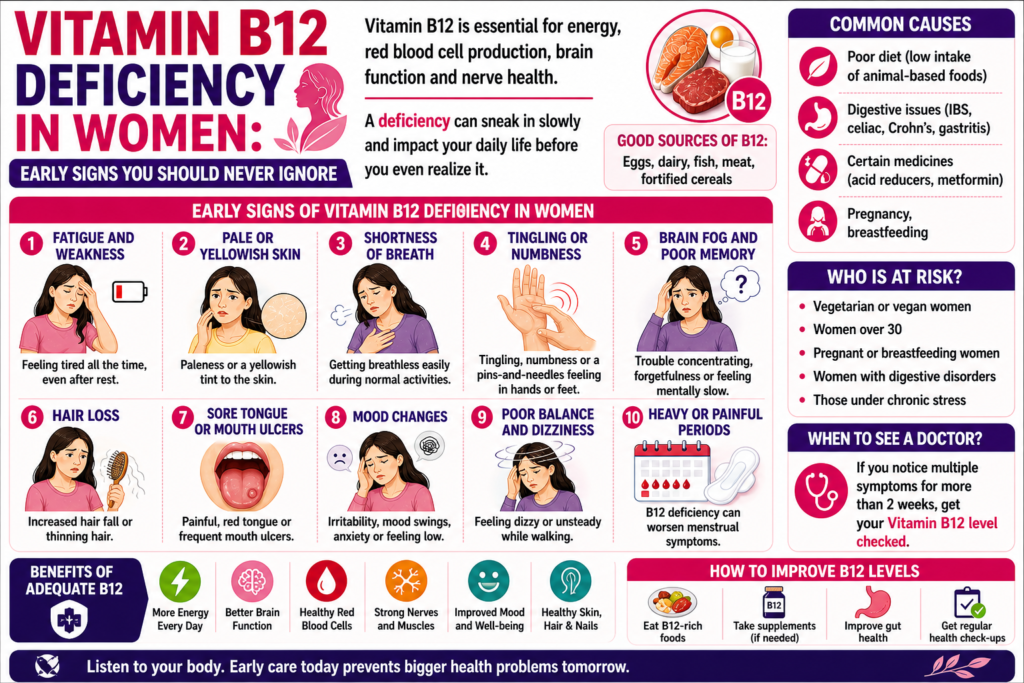
Understanding Vitamin B12 and Why It Matters
Vitamin B12 is essential for:
- Red blood cell production
- Nerve function
- Brain health
When B12 levels drop, your body struggles to carry oxygen efficiently.
What happens then?
- Low energy
- Weakness
- Mental fog
Who is at higher risk?
- Women with vegetarian or vegan diets
- High stress lifestyles
- Digestive issues
- Hormonal imbalances
Studies suggest that B12 deficiency is more common than expected, especially in people with limited dietary intake of animal-based foods.
Persistent Fatigue That Doesn’t Go Away
This is usually the first and most ignored sign.
Not normal tiredness
Not fixed by rest
What it feels like:
- Waking up tired
- Feeling drained all day
- Low motivation
Why it happens:
Without enough B12:
- Red blood cells decrease
- Oxygen supply reduces
Your body literally runs on low energy mode
Real-life insight:
Many women assume:
- “I just need more sleep”
- “I’m overworked”
But the real issue may be nutritional deficiency
Pale or Dull Skin: A Hidden Internal Signal
Skin often reflects what’s happening inside your body.
Signs to notice:
- Pale appearance
- Dull or tired-looking skin
- Slight yellowish tone
This happens due to reduced red blood cell production.
No skincare product can fix what your body lacks internally
Tingling Sensation & Nerve Changes
A very specific symptom of B12 deficiency is:
“Pins and needles” sensation
Usually in:
- Hands
- Feet
Why it happens:
Vitamin B12 supports nerve health.
When levels drop:
- Nerve signals get disrupted
In severe cases:
- Numbness
- Poor coordination
Rare insight:
This symptom is often ignored because it comes and goes—but it’s one of the strongest indicators
Hair Fall and Weak Nails
Hair and nails are often the first to show nutritional deficiencies.
What you may notice:
- Increased hair fall
- Thinning hair
- Brittle nails
Why?
When nutrients are low:
The body prioritizes survival functions over hair and nail growth
Real insight:
Many people try hair treatments…
But the real issue is often internal deficiency
Mood Changes and Brain Fog
B12 is not just physical—it also affects your mind.
Common symptoms:
- Irritability
- Mood swings
- Anxiety-like feelings
- Difficulty concentrating
- Poor sleep quality
What many people think:
“It’s just stress”
What it could be:
A nutritional imbalance affecting brain function
“What you nourish your body with shapes how you feel within.”
Shortness of Breath and Dizziness
Another overlooked symptom:
- Feeling breathless easily
- Dizziness while standing or walking
Why it happens:
Low B12 → fewer healthy red blood cells
→ Less oxygen reaches your body
Even simple activities feel tiring
Real-Life Scenario
For example:
A working woman:
- Feels tired daily
- Experiences hair fall
- Has low focus
- Feels slightly anxious
She assumes:
- It’s work stress
- It’s lack of sleep
But after testing:
Vitamin B12 levels are low
After improvement:
- Energy returns
- Focus improves
- Hair fall reduces
This is how hidden deficiencies show up in real life
When to Take It Seriously
If you notice:
- Multiple symptoms together
- Symptoms lasting for weeks
Don’t ignore it
What to do:
- Consult a doctor
- Get a simple blood test
- Improve diet or take supplements if needed
Most People Miss
Symptoms don’t appear alone
They appear in combination
Ignoring them early can lead to:
- Severe fatigue
- Nerve issues
- Long-term health problems
Conclusion: Listening to Your Body with Awareness
Vitamin B12 deficiency often starts quietly, but its impact can grow over time. Your body constantly sends signals:
- Through energy
- Through skin
- Through mood
Editorial Process
Our editorial process focuses on accuracy, clarity, and reader trust.
Health articles published on this website follow these principles:
- Research-based information from trusted medical sources
- Clear explanations written for general readers
- Regular updates when medical guidelines change
- Transparency about sources and references
Content is researched and written by health content researchers and reviewed using publicly available medical data.
Areas of focus include:
- infectious diseases
- preventive healthcare
- symptom awareness
- everyday health education
Medical Disclaimer
This article is for informational purposes only and does not replace professional medical advice. Always consult a qualified healthcare provider for diagnosis, treatment, or medical concerns.
Our Editorial & Trust Standards
At Healzeno, we aim to provide clear, responsible, and useful health information. Our content follows a structured editorial process:
Research → Writing → Fact-checking → Source verification → Editing → Publication → Periodic review
We aim to:
- Use reliable medical and public-health sources
- Avoid unsupported or misleading health claims
- Clearly distinguish general information from professional medical advice
- Update articles when important information changes
- Correct factual errors when identified
Healzeno is an independent health-information website and is not a medical clinic, hospital, or medical practice.
Why Trust Our Health Content
Our health articles are created using evidence-based information from globally recognized medical organizations. Each article is carefully researched using publicly available guidelines, research publications, and educational materials from trusted institutions such as the Centers for Disease Control and Prevention, the Mayo Clinic, the Cleveland Clinic, and the World Health Organization. Our goal is to present medical information in simple, easy-to-understand language so readers can make informed decisions about their health.
References
(This is the core source for the whole article — the NIH itself recommends pairing it with a clinical source. Consider adding a Mayo Clinic or NIDDK page on anemia/B12 deficiency if you want a second citation.)

3 Comments