
Best Foods for Energy and Stamina: What to Eat to Stay Active All Day
Quick Answer
The best foods for energy and stamina are those rich in complex carbohydrates, protein, healthy fats, and essential nutrients. Foods like bananas, oats, eggs, nuts, leafy greens, and whole grains provide steady energy, prevent fatigue, and help maintain physical and mental performance throughout the day.
Summary Box
- What it is: Foods that naturally boost energy and stamina
- Early signs: Low energy, brain fog, frequent fatigue
- Main cause: Poor diet and nutrient deficiencies
- When to worry: If low energy lasts more than 2–3 weeks
- Quick tip: Eat balanced meals with carbs + protein + healthy fats
If your energy crashes every day, your food choices—not your workload—may be the real reason.
Introduction
You wake up feeling tired. By afternoon, your energy drops. And by evening, you feel completely drained. You blame work, stress, or lack of sleep. But what if the real problem is your diet?
According to CDC (2024), poor nutrition is directly linked to low energy levels and fatigue. A Mayo Clinic report highlights that your body needs the right nutrients to produce energy efficiently—not just calories.
Eating the right foods can improve your energy levels and stamina throughout the day, especially if you often feel tired due to low immunity or recovering from conditions like flu and viral infections.
The truth is simple:
You cannot expect high energy from low-quality food.
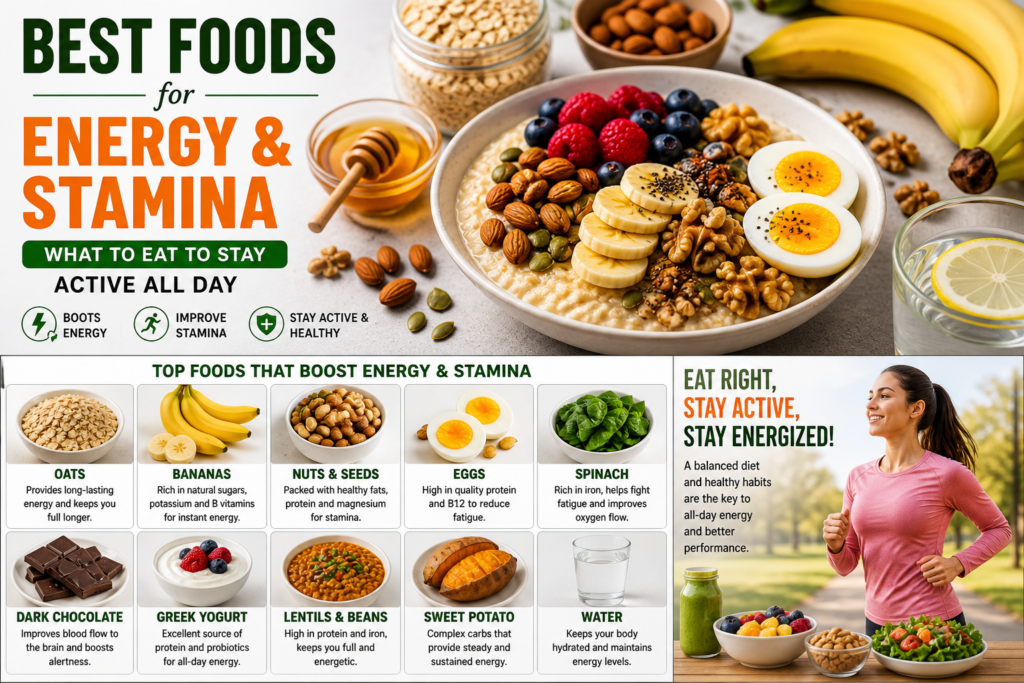
Top Foods That Boost Energy Naturally
- Bananas
- Oats
- Eggs
- Nuts
- Leafy greens
- Whole grains
- Fruits
What Are Energy-Boosting Foods?
Energy-boosting foods are foods that help your body produce and maintain energy consistently throughout the day. They don’t give sudden spikes like sugar. Instead, they provide steady and long-lasting energy.
Think of them as fuel—better fuel leads to better performance.
Early Signs Most People Ignore
- Feeling tired after meals
- Frequent sugar cravings
- Lack of focus
- Low stamina
- Mood swings
Real-Life Example
Rohit eats processed snacks and skips proper meals. He feels energetic for a short time—but crashes quickly. He depends on caffeine to stay active. Over time, his energy becomes consistently low.
Symptoms Table
| Symptom | How It Feels | Common In |
|---|---|---|
| Fatigue | Low energy all day | Adults |
| Brain fog | Poor focus | Students |
| Weakness | Low strength | Elderly |
| Energy crashes | Sudden tiredness | Office workers |
| Mood swings | Irritability | Everyone |
| Low stamina | Easily tired | Active individuals |
Main Symptoms
- Constant tiredness
- Low stamina
- Difficulty concentrating
- Frequent energy crashes
- Poor physical performance
Causes (Real-Life Based)
1. Poor Diet
Too much processed food, low nutrients
2. Skipping Meals
Leads to sudden energy drops
3. Excess Sugar Intake
Quick spikes followed by crashes
4. Dehydration
Reduces energy production
5. Nutrient Deficiencies
Low iron, vitamin B12, vitamin D
6. Irregular Eating Patterns
Disrupts body energy balance
What Most Articles Don’t Tell You
But here’s where most people get it wrong…
They think eating “healthy sometimes” is enough.
It’s not. Your body needs consistent nutrition every day.
Another big mistake:
Relying on energy drinks or caffeine
These only give short-term boosts and worsen long-term fatigue.
Truth:
Real energy comes from daily habits—not quick fixes.
Best Foods for Energy and Stamina (Detailed)
1. Bananas
Bananas provide quick energy and are rich in potassium, which helps reduce muscle fatigue often seen during flu recovery or weakness caused by fever symptoms.
2. Oats
Rich in complex carbs → slow and stable energy release
3. Eggs
High in protein → keeps you full and energized
4. Nuts (Almonds, Walnuts)
Healthy fats + protein → long-lasting stamina
5. Leafy Greens (Spinach)
Iron-rich → prevents fatigue
6. Whole Grains
Maintain stable blood sugar levels
7. Yogurt
Supports gut health and energy production
8. Fruits (Apples, Oranges)
Provide natural energy without crashes
9. Water
Proper hydration is equally important, as dehydration can worsen fatigue symptoms and slow down recovery from illnesses like fever and flu.
Treatment (What Actually Works)
Home Remedies
- Eat balanced meals regularly
- Include protein in every meal
- Stay hydrated
- Avoid processed food
Medical Treatment
- Blood tests for deficiencies
- Supplements if required
- Treatment of underlying conditions
What Doesn’t Work
- Energy drinks
- Skipping meals
- Excess caffeine
Ignoring nutrition is one of the biggest mistakes people make.
But here’s the real problem… consistency.
When to See a Doctor
- Fatigue lasting more than 2–3 weeks
- Severe weakness
- Unexplained weight changes
- Persistent low energy
High-Risk Groups:
- Elderly
- People with poor diet
- Chronic illness patients
Complications (If Ignored)
- Weak immunity
- Reduced productivity
- Mental health issues
- Increased disease risk
Prevention (Real-World Tips)
- Eat at regular times
- Focus on whole foods
- Stay hydrated
- Avoid junk food
- Maintain active lifestyle
Real-Life Scenario
Amit skips breakfast and eats fast food daily.
He feels tired, unfocused, and weak.
After switching to balanced meals, his energy improves within weeks.
Small daily changes create long-term results.
Research & Insights
- According to CDC (2024), poor nutrition contributes to fatigue and low energy
- Mayo Clinic highlights nutrition as essential for energy production
- WHO data links poor diet with lifestyle diseases
- Cleveland Clinic emphasizes balanced nutrition for sustained energy
Key Takeaways
- Food directly impacts energy levels
- Balanced nutrition is essential
- Sugar causes energy crashes
- Hydration is critical
- Consistency matters most
- Whole foods are better than processed
- Lifestyle habits affect stamina
FAQs
1. What food gives instant energy?
Bananas and fruits provide quick energy.
2. What is the best diet for stamina?
A balanced diet with carbs, protein, and healthy fats.
3. Can poor diet cause fatigue?
Yes, it is one of the main causes.
4. Are energy drinks helpful?
No, they give temporary energy only.
5. How to increase stamina naturally?
Eat well, exercise regularly, and stay hydrated.
Last Updated: April 12, 2026
Editorial Process
Our editorial process focuses on accuracy, clarity, and reader trust.
Health articles published on this website follow these principles:
- Research-based information from trusted medical sources
- Clear explanations written for general readers
- Regular updates when medical guidelines change
- Transparency about sources and references
Content is researched and written by health content researchers and reviewed using publicly available medical data.
Areas of focus include:
- infectious diseases
- preventive healthcare
- symptom awareness
- everyday health education
Medical Disclaimer
This article is for informational purposes only and does not replace professional medical advice. Always consult a qualified healthcare provider for diagnosis, treatment, or medical concerns.
Our Editorial & Trust Standards
At Healzeno, we aim to provide clear, responsible, and useful health information. Our content follows a structured editorial process:
Research → Writing → Fact-checking → Source verification → Editing → Publication → Periodic review
We aim to:
- Use reliable medical and public-health sources
- Avoid unsupported or misleading health claims
- Clearly distinguish general information from professional medical advice
- Update articles when important information changes
- Correct factual errors when identified
Healzeno is an independent health-information website and is not a medical clinic, hospital, or medical practice.
Why Trust Our Health Content
Our health articles are created using evidence-based information from globally recognized medical organizations. Each article is carefully researched using publicly available guidelines, research publications, and educational materials from trusted institutions such as the Centers for Disease Control and Prevention, the Mayo Clinic, the Cleveland Clinic, and the World Health Organization. Our goal is to present medical information in simple, easy-to-understand language so readers can make informed decisions about their health.

11 Comments