
Digital Detox for Mental Peace: Reclaiming Calm in a Connected World
Introduction
It’s 7:00 AM. Your alarm goes off. Without thinking, your hand reaches for your phone. “Just 5 minutes,” you tell yourself. But suddenly, it’s 7:35. You’ve checked messages, watched reels, scrolled through updates—and now your day starts with a strangely tired mind. Most people don’t question this habit. It feels normal. After all, being constantly connected is part of modern life. But here’s the part we ignore. That constant flow of notifications, information, and content quietly drains your mental energy. Studies suggest that excessive screen exposure is linked to higher stress levels, poor sleep, and reduced focus. Experts believe our brains are not built to process endless digital input without pauses. A digital detox isn’t about rejecting technology.
It’s about creating space where your mind can finally slow down.
Read More about Simple Self-Care Ideas for Busy People
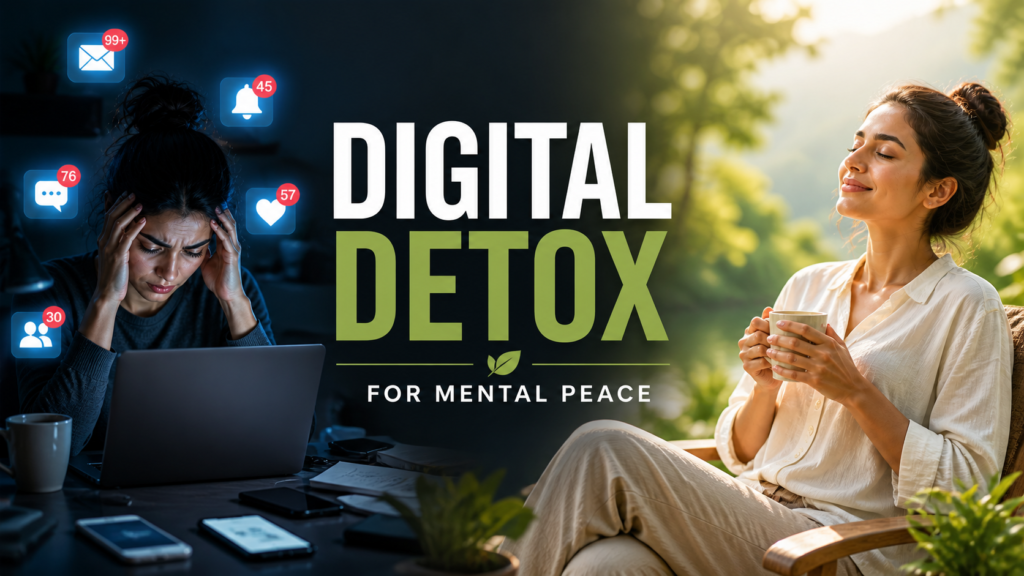
What Is Digital Detox?
A digital detox simply means taking intentional breaks from screens—phones, laptops, social media—to allow your mind to reset. It’s not about disappearing from the digital world. It’s about:
- Using devices consciously
- Reducing unnecessary screen time
- Creating moments of mental silence
Think of it as a reset button for your brain.
Early Signs You Might Be Ignoring
Digital overload doesn’t always feel serious in the beginning.
It shows up in small ways:
- Checking your phone without any reason
- Feeling restless when you’re not using a device
- Constantly switching between apps
- Difficulty focusing on one task
- Feeling mentally tired even on a light day
- Scrolling without even enjoying it
A Quick Real-Life Moment
Sneha, a marketing executive, noticed she couldn’t sit quietly for even 10 minutes. She always needed her phone. She assumed it was just a habit. But over time, she felt constantly distracted, couldn’t concentrate at work, and struggled to sleep. It wasn’t laziness. It was mental overload from constant stimulation.
Digital overload does not always appear in obvious ways. It can quietly show up as restlessness, a constant urge to check your phone, or difficulty staying present in conversations. You may notice that your attention span feels shorter, or that you feel mentally drained even after a day without physical exertion. Sleep can also be affected, especially when screens are the last thing you engage with before bed. These signs are not a failure of discipline; they are signals that your mind needs a break.
When It Starts Affecting You More Deeply
As this pattern continues, the effects become clearer:
- Overthinking increases
- Sleep becomes disturbed
- Attention span reduces
- Headaches and eye strain appear
- You feel anxious without your phone
- Mood swings become more frequent
Some people also notice:
- Lack of clarity in thinking,
- Reduced productivity
- Emotional exhaustion
Why This Happens in Real Life This isn’t just about “using your phone too much.” It’s about how your brain is being constantly stimulated. In daily life, it looks like this: You finish one task → check your phone → open social media → switch apps → watch videos → reply to messages → repeat. Your brain keeps jumping from one thing to another without rest.
Over time:
- Your attention becomes fragmented
- Your brain gets used to quick dopamine hits
- Deep focus becomes difficult
Risk increases if:
- You rely on your phone to relax
- Your work involves screens all day
- You use your phone before sleep
- You don’t have boundaries with notifications
What Most People Don’t Realize
Most advice says: “Reduce screen time.”
But here’s the truth:
It’s not just about time—it’s about mental stimulation.
Even 1 hour of intense scrolling can be more exhausting than hours of focused work.
Another important reality:
A digital detox feels uncomfortable at first.
You may feel:
- Bored
- Restless
- Urge to check your phone
That discomfort is not a problem.
It’s your brain adjusting to a healthier state.
Practical Ways to Start (Without Overdoing It)
You don’t need drastic changes. Small shifts work best.
Start Your Morning Screen-Free
Avoid your phone for the first 30 minutes after waking up.
Let your mind wake up naturally.
Create No-Phone Zones
Keep your phone away:
- During meals
- While talking to someone
- Before sleeping
This improves both focus and relationships.
Take Intentional Breaks
Every few hours:
- Step away from screens
- Walk, stretch, or sit quietly
Even 10 minutes can reset your mind.
Reduce Notifications
Turn off alerts that are not important.
Less interruption = more mental clarity.
Set a Night Routine
Avoid screens at least 1 hour before sleep.
Instead:
- Read
- Journal
- Listen to calming music
What Doesn’t Really Help
- Quitting everything suddenly
- Replacing phone with TV
- Relying only on “willpower”
It’s about creating a better environment, not forcing discipline.
When You Should Take It Seriously
If you notice these signs, it’s time to act:
- Constant anxiety without your phone
- Poor sleep for long periods
- Frequent headaches or eye strain
- Inability to focus on daily tasks
- Feeling mentally exhausted all the time
People at higher risk include:
- Individuals with high stress levels
- Students
- Working professionals
What Happens If You Ignore It
Ignoring digital overload doesn’t just affect your mood.
Over time, it can lead to:
- Chronic stress
- Burnout
- Sleep disorders
- Reduced productivity
- Anxiety and emotional imbalance
It slowly impacts your work, relationships, and overall well-being.
How to Prevent It in Daily Life
Prevention doesn’t require perfection.
Just consistency.
- Keep your phone away while working
- Set time limits on apps
- Spend time outdoors
- Practice mindfulness
- Schedule daily “offline time”
Even 20–30 minutes daily without screens can make a big difference.
A digital detox is not a one-time activity; it is a mindset. It is the choice to create space for yourself in a world that constantly demands your attention. By taking small steps to reduce digital noise, you allow your mind to rest, reset, and regain clarity. Over time, this leads to a deeper sense of calm and balance. Because in the end, peace is not found in disconnecting from the world—it is found in reconnecting with yourself.
A Simple Real-Life Shift
Rahul, a college student, used his phone late into the night every day. He thought it helped him relax. But his sleep worsened, and he felt tired all the time. He made one simple change:
👉 No phone after 10 PM.
Within weeks:
- His sleep improved
- He felt more energetic
- His focus increased
Sometimes, small boundaries create big results.
What Research Indicates
- Studies suggest that excessive screen exposure affects sleep cycles and increases stress levels.
- Experts believe reducing digital stimulation helps improve focus and emotional balance.
- Based on publicly available data, limiting screen use—especially before sleep—can significantly improve mental well-being.
FAQs
How long should a digital detox be?
It can be as simple as 30 minutes daily or a few hours weekly. Consistency matters more than duration.
Do I need to completely stop using my phone?
No. The goal is balance, not elimination.
Can digital detox improve sleep?
Yes. Reducing screen exposure before bed helps your brain relax naturally.
Why do I feel restless without my phone?
Because your brain is used to constant stimulation. It takes time to adjust.
Is digital detox really effective?
Yes. It improves focus, reduces stress, and helps you feel more present.
Author & Trust Signals
Last Updated: April 11, 2026
Author
Written by: Bunty | Health Content Researcher
Bunty is a health content researcher who focuses on explaining medical topics in clear, practical language for everyday readers. His work involves studying publicly available health guidelines and medical information from trusted organizations such as the Centers for Disease Control and Prevention, the World Health Organization, and the Mayo Clinic.
His goal is to make complex health information easier to understand so readers can recognize early symptoms, learn prevention strategies, and know when medical attention may be necessary.
Areas of focus include:
- infectious diseases
- preventive healthcare
- symptom awareness
- everyday health education
Editorial Process
Our editorial process focuses on accuracy, clarity, and reader trust.
Health articles published on this website follow these principles:
- Research-based information from trusted medical sources
- Clear explanations written for general readers
- Regular updates when medical guidelines change
- Transparency about sources and references
Content is researched and written by health content researchers and reviewed using publicly available medical data.
Medical Disclaimer
This article is for informational purposes only and does not replace professional medical advice. Always consult a qualified healthcare provider for diagnosis, treatment, or medical concerns.
Why Trust Our Health Content
Our health articles are created using evidence-based information from globally recognized medical organizations. Each article is carefully researched using publicly available guidelines, research publications, and educational materials from trusted institutions such as the Centers for Disease Control and Prevention, the Mayo Clinic, the Cleveland Clinic, and the World Health Organization. Our goal is to present medical information in simple, easy-to-understand language so readers can make informed decisions about their health.
References
Information in this article is based on educational resources and guidelines from trusted medical organizations including:
- Centers for Disease Control and Prevention
- Mayo Clinic
- Cleveland Clinic
- Medical News Today
- World Health Organization
