
Signs of Poor Gut Health: Early Symptoms, Causes & How to Fix It Naturally
Summary Box
- Gut health affects digestion, immunity, skin, and mood
- Early signs are often subtle and ignored
- Poor diet and stress are major causes
- Most gut issues can be reversed naturally
- Consistency matters more than quick fixes
Introduction
You eat a normal meal. Nothing unusual. But within minutes, your stomach feels tight. Slightly bloated. You feel heavier than usual. You ignore it. The next day, it happens again. Maybe with a little fatigue this time. A few days later, you notice sugar cravings or low energy. Still, nothing “serious,” right? This is exactly how poor gut health begins—quietly, gradually, and often unnoticed. Research published in Nature Reviews Gastroenterology & Hepatology shows that your gut microbiome plays a critical role in digestion, immunity, and even brain function. Experts from Cleveland Clinic also highlight that gut imbalance can silently affect multiple systems in the body. The problem is simple: Most people don’t recognize the early warning signs because digestive symptoms can sometimes be overlooked.
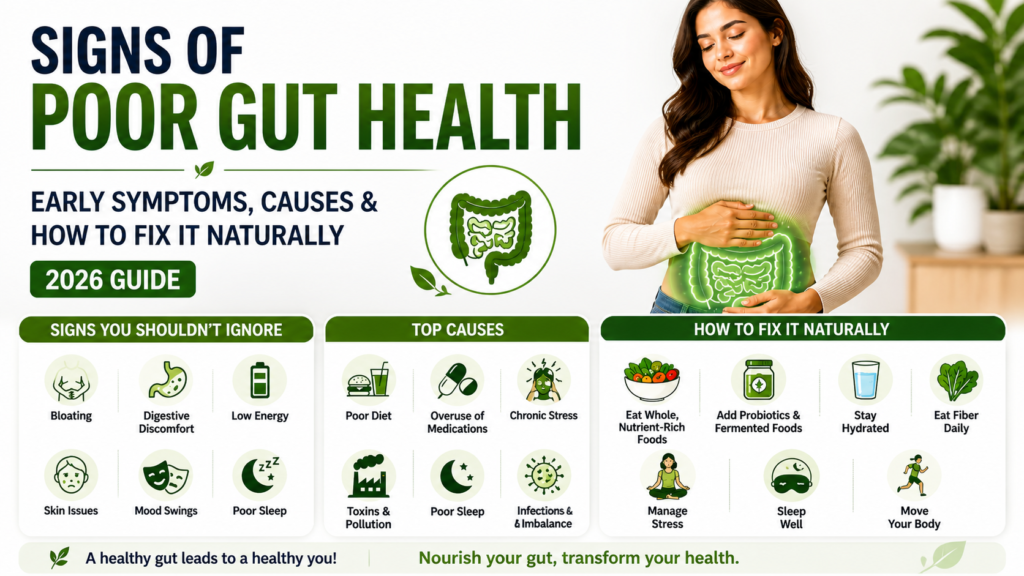
What Is Gut Health?
Gut health refers to the balance of bacteria and microorganisms living in your digestive system. Your gut contains trillions of bacteria—some beneficial, some harmful. When they are balanced, your body functions smoothly. But when harmful bacteria dominate, it leads to problems like poor digestion, inflammation, and low energy. Think of your gut like a garden. If you don’t take care of it, weeds (harmful bacteria) take over.
Early Signs Most People Ignore
These are the subtle signals your body sends:
- Feeling bloated after regular meals
- Occasional constipation or loose motion
- Feeling tired even after proper sleep
- Frequent sugar cravings
- Slight discomfort in the stomach
You finish dinner and feel unusually full—even though you didn’t eat much. You feel lazy, maybe even sleepy. You assume it’s just a heavy meal. This repeats for weeks. That’s not normal digestion. That’s your gut asking for help.
Main Symptoms of Poor Gut Health
| Symptom | What You Feel | What It Means |
|---|---|---|
| Bloating | Tight stomach | Gas imbalance |
| Constipation | Hard stools | Slow digestion |
| Diarrhea | Loose motion | Irritated gut |
| Fatigue | Low energy | Poor absorption |
| Skin issues | Acne, dullness | Inflammation |
| Brain fog | Poor focus | Gut-brain imbalance |
| Sugar cravings | Need sweets | Bad bacteria growth |
| Bad breath | Persistent smell | Digestive issue |
Causes (Real-Life Explanation)
Gut problems are not random. They are built through daily habits.
Main Causes:
1. Junk Food & Sugar
Feeds harmful bacteria and disrupts balance
2. Stress
Office pressure, overthinking, anxiety—all affect digestion
3. Poor Sleep
Late nights disturb gut rhythm
4. Antibiotics Overuse
Kills good bacteria along with bad ones
5. Sedentary Lifestyle
Less movement = slower digestion
Everyday Triggers:
- Skipping meals
- Eating late at night
- Fast food lifestyle
- Working long hours sitting
Factors Beyond Food
Your gut issues may not be caused by food alone.
For practical food choices that support digestion, see our guide to the best foods for gut health.
They often start because of:
- Chronic stress
- Poor sleep patterns
- Irregular eating timing
Research from the American Gut Project suggests lifestyle diversity impacts gut health more than diet alone.
Another hidden mistake:
People take probiotics but continue eating junk food.
That doesn’t work.
Reality:
You can’t fix gut health with shortcuts. Consistency beats everything.
Natural Remedies
If you prefer a structured short-term approach, you can also try a 7-day gut reset diet plan.
- Eat fiber-rich foods (fruits, vegetables, oats)
- Add fermented foods (curd, kefir)
- Drink enough water
- Walk daily
Medical Support
- Probiotic supplements (if recommended)
- Digestive enzymes (in some cases)
- Tests if symptoms persist
What Doesn’t Work
- Detox drinks
- Skipping meals
- Relying only on supplements
Ignoring rest is the biggest mistake people make.
When to See a Doctor
Consult a doctor if you have:
- Severe stomach pain
- Blood in stool
- Sudden weight loss
- Ongoing digestive problems (2–3 weeks+)
High-Risk Groups:
- Elderly
- Pregnant women
- Chronic illness patients
Complications (If Ignored)
Ignoring gut health can lead to:
- Chronic digestive disorders
- Weak immunity
- Nutrient deficiencies
- Skin problems
- IBS and long-term gut issues
Prevention (Simple but Powerful)
- Eat home-cooked meals
- Sleep on time
- Reduce sugar intake
- Stay active daily
- Manage stress
Real-Life Scenario
Aman works late, eats fast food, and sleeps irregularly. At first, he feels occasional bloating. Then fatigue. Then poor focus. He ignores it—until it starts affecting his productivity. This is how gut problems build in real life.
Research & Insights
- Research in Nature Reviews Gastroenterology & Hepatology links gut health with immunity and metabolism
- Cleveland Clinic experts highlight the gut-brain connection
- WHO data shows digestive issues rising due to modern lifestyle
- Based on clinical research, diet and lifestyle changes are the most effective solutions
Key Takeaways
- Gut health affects your entire body
- Early signs are often ignored
- Lifestyle matters more than supplements
- Most issues are reversible
- Consistency is key
FAQs
1. How long does it take to fix gut health?
Usually a few weeks to months with consistent lifestyle changes.
2. Can gut health affect mood?
Yes, due to the gut-brain connection.
3. Are probiotics necessary?
Helpful in some cases, but not always required.
4. What is the main cause of poor gut health?
Poor diet and chronic stress.
5. Can I fix gut health naturally?
Yes, most cases improve without medication.
Editorial Process
Our editorial process focuses on accuracy, clarity, and reader trust.
Health articles published on this website follow these principles:
- Research-based information from trusted medical sources
- Clear explanations written for general readers
- Regular updates when medical guidelines change
- Transparency about sources and references
Content is researched and written by health content researchers and reviewed using publicly available medical data.
Areas of focus include:
- infectious diseases
- preventive healthcare
- symptom awareness
- everyday health education
Medical Disclaimer
This article is for informational purposes only and does not replace professional medical advice. Always consult a qualified healthcare provider for diagnosis, treatment, or medical concerns.
Our Editorial & Trust Standards
At Healzeno, we aim to provide clear, responsible, and useful health information. Our content follows a structured editorial process:
Research → Writing → Fact-checking → Source verification → Editing → Publication → Periodic review
We aim to:
- Use reliable medical and public-health sources
- Avoid unsupported or misleading health claims
- Clearly distinguish general information from professional medical advice
- Update articles when important information changes
- Correct factual errors when identified
Healzeno is an independent health-information website and is not a medical clinic, hospital, or medical practice.
Why Trust Our Health Content
Our health articles are created using evidence-based information from globally recognized medical organizations. Each article is carefully researched using publicly available guidelines, research publications, and educational materials from trusted institutions such as the Centers for Disease Control and Prevention, the Mayo Clinic, the Cleveland Clinic, and the World Health Organization. Our goal is to present medical information in simple, easy-to-understand language so readers can make informed decisions about their health.

5 Comments