High-Protein Vegetarian Diet Plan for Weight Loss
Introduction
A high-protein vegetarian diet for weight loss is one of the most effective and sustainable ways to lose fat while preserving muscle mass—especially in an Indian lifestyle where plant-based eating is common.
Protein plays a critical role in:
- Boosting metabolism
- Reducing hunger and cravings
- Preserving lean muscle during fat loss
This guide provides a complete Indian vegetarian protein diet plan, including:
- Practical fat loss tips
- Protein-rich foods list
- 7-day meal structure
- Protein chart with calories
Why Protein is Important for Weight Loss
Protein has a higher thermic effect compared to fats and carbohydrates, meaning your body burns more calories digesting it.
Key Benefits:
- Keeps you full for longer (reduces overeating)
- Supports muscle retention during calorie deficit
- Stabilizes blood sugar levels
- Reduces late-night cravings
Studies published in nutrition science journals suggest that higher protein intake can significantly improve fat loss outcomes and satiety levels.
What Is a High-Protein Vegetarian Diet Plan?
A high-protein vegetarian diet plan is a structured way of eating where:
- Protein intake is increased
- Carbohydrates are balanced, not eliminated
- Meals are designed to support fat loss
Vegetarian protein sources include:
- Paneer
- Tofu
- Lentils (dal)
- Chickpeas and beans
- Dairy products like curd and milk
The goal is to support fat loss while maintaining strength and energy.
Along with protein intake, choosing foods that support healthy digestion can make a balanced vegetarian diet easier to maintain.
How Much Protein Do You Need?
Protein requirements depend on your body weight and activity level.
Simple Formula
- Sedentary individuals: 0.8 g per kg body weight
- Weight loss: 1.0–1.2 g per kg
Example
If your weight is 60 kg, your daily protein requirement is approximately 60–72 grams.
Early Signs of Low Protein Intake
- Frequent hunger after meals
- Sugar cravings
- Low energy levels
- Hair fall or weak nails
- Slow or no weight loss
- Loss of muscle tone
Real-Life Example
A typical meal of roti and sabzi may fill your stomach but not provide enough protein. Within a couple of hours, hunger returns, leading to snacking. This pattern is often due to low protein intake rather than lack of discipline.
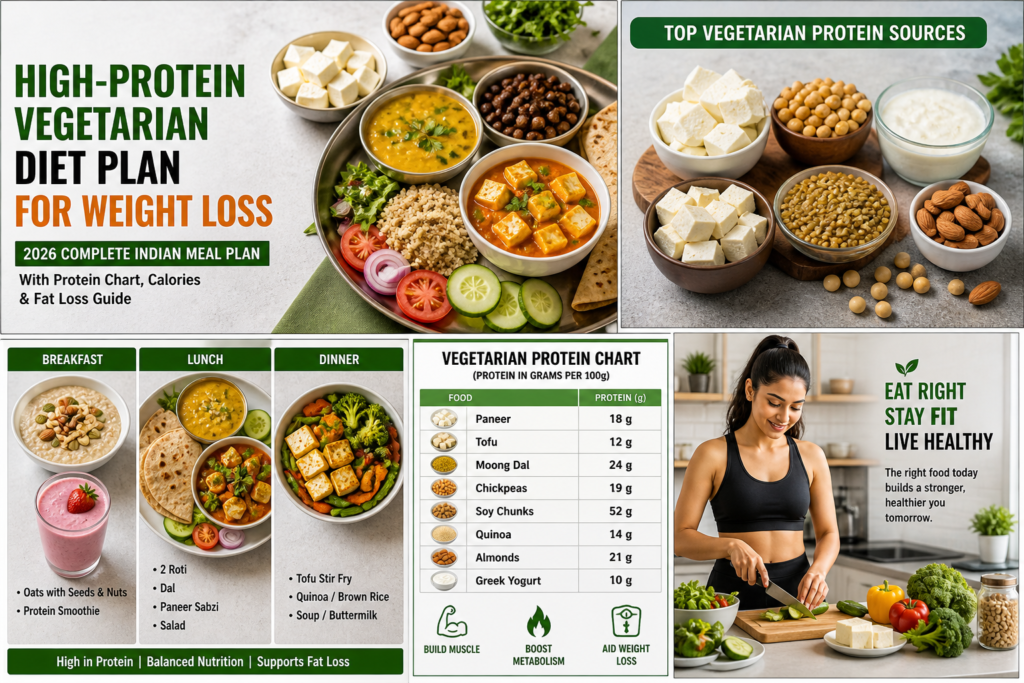
High-Protein Vegetarian Foods (With Values)
| Food | Protein (per 100g approx.) |
|---|---|
| Paneer | 18g |
| Tofu | 10g |
| Boiled chickpeas | 19g |
| Kidney beans (rajma) | 24g |
| Moong dal | 24g |
| Curd | 10g |
| Soy chunks | 52g |
Foods to Eat During Weight Loss
- Paneer, tofu, and curd
- Lentils and legumes
- Whole grains in controlled portions
- Nuts and seeds
- Fresh vegetables and fruits
Foods to Avoid
- Sugary drinks
- Fried snacks
- Bakery products
- Refined flour foods
- Excess sugar in tea or coffee
7-Day High-Protein Vegetarian Diet Plan (Indian and Practical)
Day 1–2
| Meal | Food | Protein | Calories |
|---|---|---|---|
| Breakfast | Oats with milk and nuts | 12g | 250 |
| Lunch | Dal, roti, curd | 18g | 400 |
| Dinner | Paneer bhurji | 20g | 350 |
| Snacks | Roasted chana | 8g | 150 |
Total: ~58g protein
Day 3–4
| Meal | Food | Protein | Calories |
|---|---|---|---|
| Breakfast | Besan chilla with curd | 15g | 280 |
| Lunch | Rajma with rice | 18g | 420 |
| Dinner | Tofu sabzi | 18g | 300 |
| Snacks | Peanuts | 7g | 160 |
Total: ~58g protein
Day 5–6
| Meal | Food | Protein | Calories |
|---|---|---|---|
| Breakfast | Milk smoothie with nuts | 14g | 260 |
| Lunch | Chole with roti | 18g | 420 |
| Dinner | Paneer with vegetables | 20g | 350 |
| Snacks | Sprouts | 8g | 150 |
Total: ~60g protein
Day 7
- Maintain protein intake
- Eat simple home-cooked meals
- Follow portion control
Common Mistakes That Slow Weight Loss
- Eating low-protein meals
- Skipping meals
- Avoiding healthy fats and dairy unnecessarily
- Relying only on salads
- Consuming excessive carbohydrates
Weight loss is not about eating less. It is about eating correctly.
Treatment (What Works)
Effective Approach
- Include protein in every meal
- Maintain calorie balance
- Stay physically active
- Sleep adequately
What Does Not Work
- Crash diets
- Skipping meals
- Only fruit-based diets
Ignoring protein is one of the most common mistakes in vegetarian weight loss diets
When to See a Doctor
- Sudden unexplained weight loss
- Persistent fatigue
- Hormonal imbalances
- Chronic health conditions
For women whose weight concerns are also related to hormonal health, our guide to a PCOS diet for weight loss explains the dietary approach in more detail.
Complications If Ignored
- Muscle loss
- Slower metabolism
- Weight regain
- Nutritional deficiencies
Prevention (Sustainable Habits)
- Plan meals in advance
- Include protein in every meal
- Maintain consistency
- Limit processed foods
Real-Life Scenario
A working professional consumes mainly carbohydrate-based meals and snacks frequently. Weight loss remains slow despite effort. After increasing protein intake through simple dietary changes, hunger reduces, energy improves, and fat loss becomes more consistent.
Research and Insights
A 2015 study published in the American Journal of Clinical Nutrition found that high-protein diets increase satiety and support fat loss. Harvard Health Publishing states that protein plays a key role in appetite regulation and metabolism. Cleveland Clinic emphasizes that adequate protein intake is essential for maintaining muscle mass during weight loss.
Key Takeaways
- Protein is essential for effective weight loss
- Vegetarian diets can meet protein requirements
- Balanced meals are more effective than restrictive diets
- Consistency is critical for long-term results
FAQs (Structured Data Ready)
1. What is the best vegetarian protein source for weight loss?
Soya chunks, paneer, lentils, and Greek yogurt are among the best high-protein vegetarian foods.
2. Can I lose weight on a vegetarian diet?
Yes, a calorie-controlled vegetarian diet rich in protein can effectively support fat loss.
3. How much protein do I need daily?
Around 1.2–1.6g per kg body weight for fat loss.
4. Is paneer good for weight loss?
Yes, in moderation. It is high in protein and helps keep you full.
5. Are oats good for fat loss?
Yes, oats are rich in fiber and help control hunger.
Editorial Process
Our editorial process focuses on accuracy, clarity, and reader trust.
Health articles published on this website follow these principles:
- Research-based information from trusted medical sources
- Clear explanations written for general readers
- Regular updates when medical guidelines change
- Transparency about sources and references
Content is researched and written by health content researchers and reviewed using publicly available medical data.
Areas of focus include:
- infectious diseases
- preventive healthcare
- symptom awareness
- everyday health education
Medical Disclaimer
This article is for informational purposes only and does not replace professional medical advice. Always consult a qualified healthcare provider for diagnosis, treatment, or medical concerns.
Our Editorial & Trust Standards
At Healzeno, we aim to provide clear, responsible, and useful health information. Our content follows a structured editorial process:
Research → Writing → Fact-checking → Source verification → Editing → Publication → Periodic review
We aim to:
- Use reliable medical and public-health sources
- Avoid unsupported or misleading health claims
- Clearly distinguish general information from professional medical advice
- Update articles when important information changes
- Correct factual errors when identified
Healzeno is an independent health-information website and is not a medical clinic, hospital, or medical practice.
Why Trust Our Health Content
Our health articles are created using evidence-based information from globally recognized medical organizations. Each article is carefully researched using publicly available guidelines, research publications, and educational materials from trusted institutions such as the Centers for Disease Control and Prevention, the Mayo Clinic, the Cleveland Clinic, and the World Health Organization. Our goal is to present medical information in simple, easy-to-understand language so readers can make informed decisions about their health.

8 Comments